
SIX mornings of every seven, William A. Whitehead stepped aboard a rail car at Newark’s Centre Street depot. His train crept briefly north, then eastward to cross the Passaic River. Getting up speed, the engine trailed a thick plume of smoke and cinders along its flat, straight course through the Kearny meadows. Once over the Hackensack River the cars veered southeast, entered the deep cut at Bergen Hill, and emerged for the final leg of their run to the Hudson waterfront at Jersey City.
In 1843, when Whitehead began traveling on this route to and from his New York office, stages and steamboats still had a share of New Jersey traffic. Rail travel, over the dozen years since it was first pioneered in the state, had seen a steady increase in ridership, but for many New Jerseyans it remained a novelty.
Whitehead was born into a nation still reliant on those far slower conveyances, but he relished the fitful awakening to a new mode of travel. He rode iron rails up a mountain ridge to coal mines near Mauch Chunk, Pennsylvania. He journeyed the initial few miles of the Baltimore and Ohio in Maryland, and the Charleston and Hamburg in South Carolina. On the first two of these lines the cars were drawn by horses (at Mauch Chunk, gravity was the motive power on the descent), but a steam locomotive powered the Charleston train that he rode less than two years later.1
For his New York commute, Whitehead relied on the facilities of the New Jersey Rail Road and Transportation Company. It had received a charter from the state in 1832, with license to lay a continuous line of track linking New Brunswick to the Hudson. To meet that expectation was no small feat. The track between Newark and Jersey City alone required bridges sturdy enough to bear the weight of locomotives and the force of tides, as well as embankments that would keep trains from sinking into the marshes.
When this section opened, horse-drawn stages had to be used over the summit of Bergen Hill. A track- and toll-sharing agreement with the Paterson and Hudson River Railroad provided the means to overcome this obstacle. More than three years of digging and blasting through a 40-foot-tall barrier of earth and basaltic rock produced a sinuous defile about a mile in length. It cost more than $400,000 and many lives to create the grade necessary for locomotives to take the place of horse cars.2
As the first railroad to enter Newark, the New Jersey was virtually sure to become the premier line for commuters. It was not, however, the state’s first railroad, or its most profitable. Those distinctions, together with an almost limitless fund of infamy, belonged entirely to the Camden and Amboy.3
The charter of the Camden and Amboy Railroad, granted on the 4th of February 1830 to build a line across the breadth of New Jersey from the Delaware River to Raritan Bay, would also bring to within a few hours of one another the two principal cities of the United States. Moreover it would serve as a conduit for traffic between the country’s northern and southern sections, and a good deal of the western commerce through Philadelphia as well. Straddling the vital midsection of the eastern seaboard, the Camden and Amboy’s importance extended far beyond the limits of its home state.
This company, however, owed its might to more than geographical advantages. It was born to a life of unequalled privilege, from the encounter of a compliant state legislature with the prestige, ingenuity and wealth of two New Jersey dynasties: the Stevens family of Hoboken and the Stocktons of Princeton.

The well-heeled railroad lobby at Trenton was controlled by the capable sons of Colonel John Stevens, a pioneer in the use of steam technology on this side of the Atlantic. Weaker, less affluent elements opposed to a railroad and in favor of a state-supported canal found their champion in the colorful and charismatic naval hero Robert Field Stockton. The legislature laid the groundwork for future cooperation between the two sides by chartering twin corporations on the same day: the Camden and Amboy Railroad and Transportation Company, and the Delaware and Raritan Canal Company.
In return for a significant quantity of stock and payment of transit duties, the legislature barred construction of any other canal or railroad nearby. This was merely the opening act in a swift surrender of New Jersey’s sovereignty to its titans of transportation. To erase any possibility that the Delaware and Raritan might use its right-of-way to build a rival railroad to the Camden and Amboy, the so-called Marriage Act of 1831 melded the two entities’ capital, stock and earnings, and consented to the combined management of what became known as the Joint Companies. The following year, the legislature prohibited any other railroad from competing with the Camden and Amboy for traffic between New York and Philadelphia.
By granting such a monopoly, the state could anticipate enough income from transit dues and stock dividends to pay most of the costs of government. At the same time it made the Joint Companies into its political and economic masters. From a desire to reclaim some local autonomy, the New Jersey Rail Road was organized partly in response. With its Jersey City terminus offering a far more direct connection to New York, the NJRR seemed poised to win customers away from the Camden and Amboy.
Beginning in 1833, a Pennsylvania-based company prepared to link to the New Jersey Rail Road at New Brunswick, challenging the Camden and Amboy’s monopoly on routes between Philadelphia and New York. But after a sometimes vicious three-year struggle fought in the legislature, the courts and the press, the Joint Companies managed to secure their privileged position, absorb the upstart railroad and connect to the NJRR themselves.4 Any thought of independence from the powerful combine proved but a dream.
By an agreement of the Camden and Amboy with the New Jersey, beginning in 1839, passengers were for the first time carried entirely by rail between Philadelphia and New York, save for two short ferry rides. The Newark Daily Advertiser praised “accommodations” on the line, as “every thing that gentlemanly and attentive agents, comfortable fires, spacious cars, and a good cup of coffee can render them.”5
But travelers from outside New Jersey complained that the through fare was exorbitant compared to rates for equivalent trips elsewhere. Another, local irritant was the fact that the New Jersey Rail Road’s profits from this traffic were small in proportion to the share of track that it managed: while it carried each passenger more than a third of the way between the two cities, the NJRR received only one-fourth of each fare. The Joint Companies’ treasury got the rest, a cause of consternation for which no remedy could be expected, either from the monopoly or from the legislature it controlled. A provision was even inserted in the new constitution of 1844, effectively safeguarding the Joint Companies from any future attempt of the state to buy them out.
Agitation against the monopoly gathered strength in the late 1840s. A lawsuit claiming extortionate charges to carry freight was followed by petitions to Congress: merchants in neighboring states asked that a national railroad be built to circumvent the Camden and Amboy. Then came a series of letters published in the Burlington Gazette, exposing in minute detail what appeared to be a pattern of frauds upon the people of New Jersey.
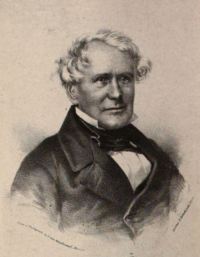
The author of these letters, “A Citizen of Burlington,” who soon revealed himself as the economist Henry C. Carey, wrote persuasively that the state lost more than it gained from the exclusive status afforded the Joint Companies. He argued that the Camden and Amboy’s misappropriation of funds, inferior service and arrogance had seriously diminished New Jersey’s well-being, not to mention its reputation.
The press and the public across the state and beyond thrilled to Carey’s reports, reprinted in pamphlet form.6 The Joint Companies rejected his charges; the legislature, of course, resisted looking into them. Mass meetings were held in several counties; delegates to a statewide anti-monopoly convention were chosen; there were even rumblings of secession among New Jersey Whigs, testing the waters for a new political party committed to crushing the monopoly. Recently returned from the conquest of California from Mexico, Robert F. Stockton rose to defend the Joint Companies. In a published Appeal to the People of New Jersey he invoked states’ rights and “the obligation of contracts,” and warned his fellow citizens against the intrigues of “socialists, speculators or demagogues….”7
These disruptions, however, did little lasting damage to a monopoly that would be called, even during the Progressive Era, “probably the most odious in American history….”8 Henry Carey’s intricate portrait of plunder and corruption was likely not overstated, although he was never granted the promised access to the Joint Companies’ records. What can never be adequately measured is the degree to which the monopoly’s conduct and culture shaped the conduct and culture of society at large.
Whitehead is a case in point. During his eight years as a Wall Street broker he dealt, as did most, in railroad securities: documentation survives of New Jersey Rail Road stock transfers handled by his firm, which certainly traded in Camden and Amboy stocks as well. With a mathematical certainty that Whitehead himself would have respected, his fortunes stood to rise and fall with theirs.9
More subtle, more pervasive influences operated in the collegial connections Whitehead developed during the 1840s. The New Jersey Historical Society, which he served as corresponding secretary from its founding in 1845, gained him “many pleasant acquaintances and friends,”10 but also exposed him to men whose fortunes had either helped create the monopoly, or were by it enhanced or imperilled.
On the inaugural roster of the Historical Society were a former governor, Peter D. Vroom, who had attended at the birth and union of the Joint Companies; chief justice Joseph C. Hornblower, who adjudicated much of the litigation surrounding them; attorneys formerly or currently on the payroll of one company or both, notably Joseph P. Bradley, general counsel for the Joint Companies; and a director of the Delaware and Raritan Canal and president of the Joint Companies’ board, James Parker, who happened to be Whitehead’s father-in-law.11
Also enrolled among the Society’s original members was John P. Jackson, the first secretary of the New Jersey Rail Road. Having campaigned for the NJRR’s creation in 1832, Jackson fostered its success and promoted its identity as a corporation distinct from the Joint Companies. We can only guess at the effect the anti-monopoly uproar, which reached a crescendo in the fall of 1849, had on Jackson and the rest of the New Jersey’s leadership, but that fall saw several notable changes in NJRR governance. The unforeseen death of the treasurer led, on 22 November, to the appointment of his replacement. The directors at the same time named Jackson vice-president and, to succeed Jackson, “through the influence of my many Newark friends, and my personal acquaintance with the officers of the road,” William A. Whitehead, secretary.12
Copyright © 2023-2026 Gregory J. Guderian
[1] Whitehead was an early passenger on the Mauch Chunk railroad in July 1830, on the Baltimore and Ohio as far as Ellicott’s Mills in December 1830, and on the first twelve miles of the South Carolina Railroad in April 1832. These journeys are described in an unpublished memoir held by the Key West Art & Historical Society, Key West, Florida: W. A. W[hitehead], Memorandums of peregrinations by land & water recorded for my own amusement, vol. 2nd, 9-14, 68-69, 103-104. For the visit to Mauch Chunk, see my earlier post 073–The ride of a lifetime.
[2] An undiscovered report on the details of the Bergen cut is cited in the undergraduate thesis of Leslie E. Freeman, Jr., “New Jersey Railroad and Transportation Company” (Princeton University Department of History, 1950) 45 n35. Freeman’s text was printed, regrettably without its references, bibliography and conclusion, in The Railway and Locomotive Historical Society Bulletin 88 (May 1953) 100-159.
[3] General treatments of the Camden and Amboy and the Joint Companies include Roger Avery Barton, “The Camden and Amboy railroad monopoly,” Proceedings of the New Jersey Historical Society ser. 4, 12:4 (Oct. 1927) 405-419 (hereafter “Barton, ‘Monopoly’”), and Wheaton J. Lane, From Indian trail to iron horse. Travel and transportation in New Jersey 1620-1860 (Princeton 1939, hereafter “Lane, From Indian trail to iron horse”) esp. 258-261, 284-309, 323-370. [James Knowles Medbery,] “The New Jersey monopolies,” The North American review 104:215 (April 1867) 428-476, is polemical but still valuable, as are the many writings of Henry C. Carey, on whom see below.
[4] For the challenge of the Philadelphia and Trenton Railroad and its allies to the Camden and Amboy’s monopoly, see Robert T. Thompson, “Transportation combines and pressure politics in New Jersey–1833-1836,” Proceedings of the New Jersey Historical Society 57:1 (January 1939) 1-15, 57:2 (April 1939) 71-86.
[5] Newark (N.J.) daily advertiser 17 January 1839 2:1.
[6] Carey’s charges, published from January to April 1848, were collected as sixteen Letters to the people of New Jersey, on the frauds, extortions, and oppressions of the railroad monopoly, by a citizen of Burlington (Philadelphia 1848). The Joint Companies felt compelled to respond, issuing in June an Address of the Joint Board of Directors of the Delaware and Raritan Canal and Camden and Amboy Railroad Companies, to the people of New Jersey (Trenton 1848). Quipping that “The mountain has been at length delivered of a mouse,” Carey savaged the Address and other efforts of the monopoly to defend itself in subsequent publications.
[7] R. F. Stockton, “Address to the people of New Jersey,” Princeton (N.J.) Whig 28 September 1849 1:3-2:3, issued as Address [in later editions Appeal] of Commodore R. F. Stockton, to the people of New Jersey, in relation to the existing contracts between the State and the United Delaware and Raritan Canal and Camden and Amboy Railroad Companies. September 24th, 1849 (Princeton 1849) 10, 21 et passim.
[8] Frederick A. Cleveland and Fred Wilbur Powell, Railroad promotion and capitalization in the United States (New York 1909) 166-167.
[9] Two volumes, preserved in United New Jersey Railroad and Canal Company Records, Manuscript Group 394, New Jersey Historical Society, Box 13, record transfers in 1840 and 1841 of NJRR shares by the firm of Parker & Whitehead. The shares’ par value was $50. Whitehead launched the brokerage at 46 Wall Street with his wife’s cousin James C. Parker in 1839 or 1840; it failed in 1845. For more on this company, see my earlier post 046–A city of modern ruins.
[10] “Childhood and youth of W. A. Whitehead 1810-1830,” transcription of an unpublished memoir of which copies are held by the Florida Keys History Center, Monroe County Public Library, Key West, and by the P. K. Yonge Library of Florida, George A. Smathers Libraries, University of Florida (hereafter “‘Childhood and youth’”); page 53 contains the reference.
[11] “Original members, enrolled under the resolution adopted May 7, 1845,” Proceedings of the New Jersey Historical Society [ser. 1] 1:1 (1845) 20. Robert F. Stockton was among the first elected to membership in the Society and, while I’ve seen no evidence that he was active in its work, his printed Appeal was a welcome acquisition to the Society library: Whitehead was one of the first to donate copies. Proceedings of the New Jersey Historical Society [ser. 1] 1:2 (1845) 80, 6:1 (1851) 21.
[12] Newark daily advertiser 1 November 1849 2:1, 1 December 1849 2:2; “Childhood and youth” 49.
 An attractive presence