058–Climate of Newark

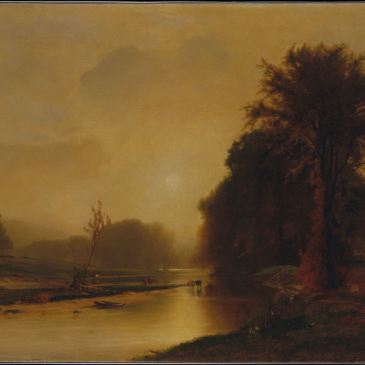
RECENTLY, there were reports that the Oxford English Dictionary had identified the earliest use of the term “climate change.” In the context in which they appeared–an American scientific magazine of 1854–and even in their inflection, the words differed somewhat from how we read and understand them today. But it’s evident from the brief article where they were … More 058–Climate of Newark
057–The Daily

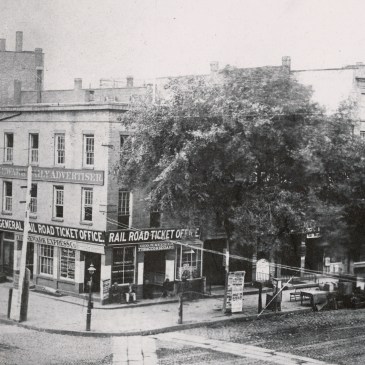
BETWEEN the day on which William A. Whitehead, at age 13, left Newark with his family for Perth Amboy and the day that he returned, at age 33, to live there once more with a new family, the place, like Whitehead, had come of age. The Newark he returned to was a far cry from … More 057–The Daily

056–Our man in London

SELDOM are scholars, scientists or other devotees of learning able to practice their devotions apart from institutions, whether it’s by choice or necessity that they work with or under them. The power wielded by the likes of learned societies, religious organizations, schools or governments at any level, and their shifting propensities to foster or frustrate … More 056–Our man in London

055–Library Hall

CONVERSATIONS on the New York train touched on topics from the mundane to the sublime, but among a few regular Newark commuters the talk revolved, more often than not, around books. One morning in 1846, as we’re told, the discussion veered from the contents of books to their numbers and distribution: shelves in some homes groaned … More 055–Library Hall

054–Native sense

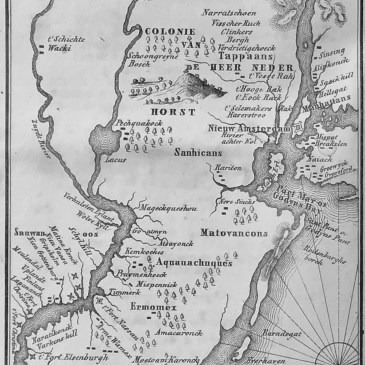
WILLIAM A. Whitehead’s East Jersey under the Proprietary Governments1 opens with a map of New Jersey, but a map of long and complicated pedigree. Its placement at the front of this octavo volume is itself a cause of some perplexity. The frontispiece was lithographed from the meticulous pen-and-ink tracing of a section of a much larger … More 054–Native sense

053–Scot’s Model

THERE’S no second chance to make a first impression, and this had all the makings of an audacious debut. Notices of a new historical society for New Jersey, emanating from the busy pen of its corresponding secretary, had barely reached the meeting rooms of other learned associations around the country. Now they, and the wider … More 053–Scot’s Model

052–Field work

CONVENING in January 1846 at the place of its birth to celebrate the New Jersey Historical Society’s first year, members could look back with satisfaction, and look expectantly ahead. They reviewed the Society’s achievements over the past eleven months, chose officers for the year to come–a formality, as the incumbents were re-elected without exception and … More 052–Field work

051–New Jersey by the numbers

EMPLOYED variously as clerk, land surveyor, customs collector, banker and financier through a professional life spanning seven decades, William A. Whitehead had an eye almost always to what could be observed, quantified and verified. His mathematical bent was manifest early on. As a boy, coveting a classmate’s “half-used” text of arithmetic (a “Cyphering Book”), he … More 051–New Jersey by the numbers

050–Meetings of minds

LONG after the event, William A. Whitehead recalled how, through the 1845 founding of a historical society for New Jersey, he penetrated a circle of “several prominent gentlemen … whom I had never met before.”1 By many standards, Whitehead would have been regarded as an interloper. The men who gathered in Trenton that February worked … More 050–Meetings of minds

049–Try, try again

MORE ancient and enduring than New Jersey’s status as a Revolutionary battleground has been its contest for self-definition. The state is often coarsely cast as suffering a kind of bipolar disorder, forever torn between the megacities it faces across its two frontier rivers. The nature of that struggle is of course far more complex, variously … More 049–Try, try again