087–Interregnum

DUTCH names grow profusely on William A. Whitehead’s family tree. While his surname betrays an English origin, the children of his father’s first marriage traced their maternal ancestry to the Rikers, one of the foremost families of New Netherland. The lineage of Whitehead’s own children went back on their mother’s side to a union between … More 087–Interregnum

083–Fire-proof

INITIALLY, William A. Whitehead had doubts that a state historical society for New Jersey could succeed. He wondered whether members and public support could be found “in any one of our towns or cities” sufficient to assure the survival of such an institution.1 After its founding, however, there was scarcely room for skepticism: the historical … More 083–Fire-proof

082–A house divided

NO stranger to the place, or to history, a Newark newspaper correspondent ascended to the third story of that city’s Library Hall, where beneath the façade’s stone crenellations was lodged the library of the New Jersey Historical Society. On his visit the writer lingered, momentarily, before two of several pictures that hung about the walls: … More 082–A house divided

081–The monopolists

SIX mornings of every seven, William A. Whitehead stepped aboard a rail car at Newark’s Centre Street depot. His train crept briefly north, then eastward to cross the Passaic River. Getting up speed, the engine trailed a thick plume of smoke and cinders along its flat, straight course through the Kearny meadows. Once over the … More 081–The monopolists

074–Scissors paper paste

FACED with an array of nineteenth-century scrapbooks, historians will likely nod in agreement with one of the more intrepid investigators of such specimens, who pronounced them both “tantalizing” and “impossibly frustrating.” While a scrapbook promises a window on its creator’s private past, the practice of scrapbook-making also obscures, even destroys, the context and sometimes the … More 074–Scissors paper paste

056–Our man in London

SELDOM are scholars, scientists or other devotees of learning able to practice their devotions apart from institutions, whether it’s by choice or necessity that they work with or under them. The power wielded by the likes of learned societies, religious organizations, schools or governments at any level, and their shifting propensities to foster or frustrate … More 056–Our man in London

054–Native sense

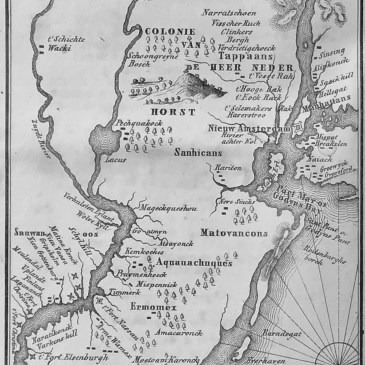
WILLIAM A. Whitehead’s East Jersey under the Proprietary Governments1 opens with a map of New Jersey, but a map of long and complicated pedigree. Its placement at the front of this octavo volume is itself a cause of some perplexity. The frontispiece was lithographed from the meticulous pen-and-ink tracing of a section of a much larger … More 054–Native sense

053–Scot’s Model

THERE’S no second chance to make a first impression, and this had all the makings of an audacious debut. Notices of a new historical society for New Jersey, emanating from the busy pen of its corresponding secretary, had barely reached the meeting rooms of other learned associations around the country. Now they, and the wider … More 053–Scot’s Model

052–Field work

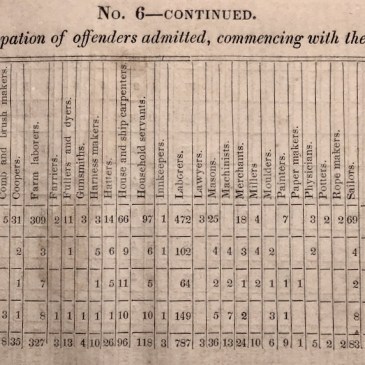
CONVENING in January 1846 at the place of its birth to celebrate the New Jersey Historical Society’s first year, members could look back with satisfaction, and look expectantly ahead. They reviewed the Society’s achievements over the past eleven months, chose officers for the year to come–a formality, as the incumbents were re-elected without exception and … More 052–Field work

051–New Jersey by the numbers

EMPLOYED variously as clerk, land surveyor, customs collector, banker and financier through a professional life spanning seven decades, William A. Whitehead had an eye almost always to what could be observed, quantified and verified. His mathematical bent was manifest early on. As a boy, coveting a classmate’s “half-used” text of arithmetic (a “Cyphering Book”), he … More 051–New Jersey by the numbers